<?xml version="1.0" encoding="UTF-8"?>
<rss version="2.0"
	xmlns:content="http://purl.org/rss/1.0/modules/content/"
	xmlns:wfw="http://wellformedweb.org/CommentAPI/"
	xmlns:dc="http://purl.org/dc/elements/1.1/"
	xmlns:atom="http://www.w3.org/2005/Atom"
	>

<channel>
	<title>Shannon Hayes</title>
	<atom:link href="http://chelseagreen.com/blogs/shannonhayes/feed/" rel="self" type="application/rss+xml" />
	<link>http://chelseagreen.com/blogs/shannonhayes</link>
	<description>Just another The Chelsea Green Weblogs weblog</description>
	<pubDate>Mon, 14 May 2012 23:29:48 +0000</pubDate>
	<generator>http://wordpress.org/?v=2.5.1</generator>
	<language>en</language>
			<item>
		<title>Just Me and My Sink</title>
		<link>http://chelseagreen.com/blogs/shannonhayes/2012/05/14/just-me-and-my-sink/</link>
		<comments>http://chelseagreen.com/blogs/shannonhayes/2012/05/14/just-me-and-my-sink/#comments</comments>
		<pubDate>Mon, 14 May 2012 23:29:48 +0000</pubDate>
		<dc:creator>shannonhayes</dc:creator>
		
		<category><![CDATA[Simple Living]]></category>

		<guid isPermaLink="false">http://chelseagreen.com/blogs/shannonhayes/?p=25</guid>
		<description><![CDATA[Seven weeks of vacation was fun, but our farmers’ market starts in two  weeks, and there is a backlog of work that needs tackling in order to be  ready for opening day.  We’ve been making soap, lip balm and candles;  cleaning, repairing and updating  our display spaces; weaving baskets to [...]]]></description>
			<content:encoded><![CDATA[<p>Seven weeks of vacation was fun, but our farmers’ market starts in two  weeks, and there is a backlog of work that needs tackling in order to be  ready for opening day.  We’ve been making soap, lip balm and candles;  cleaning, repairing and updating  our display spaces; weaving baskets to  have in inventory;reclaiming the blueberries, grapes and asparagus from  the spring weeds; organizing to get the sausage made; catching up on  Saoirse’s homeschool lessons and Ula’s eye therapy; and tackling the  glut of spring planting. This week, Bob also had to take our fleeces up  to the mill in Prince Edward Island, where they will be made into  blankets and yarn to sell.   Two days before he was scheduled to leave,  our sink backed up.  He stayed up all hours of the night attempting  every plumbing  trick he knew of in an effort to clear it out.</p>
<p>Thankfully, the girls were both visiting friends and family for the  weekend, leaving us alone to deal with the mess.  In a last ditch effort  prior to his departure, he went out and bought a gallon of some sort of  liquid fire, dumped it down the drain, and hoped for the best.</p>
<p>Things only got worse.   The sink backed up like never before, and  filled itself with the toxic poison.  Bob stared at me, wide-eyed.  “I’m  SO sorry!  I don’t want to leave you with this!”  We cooked on the  grill and carried our dishes back and forth to the remaining working  sinks in the house, and agreed it was time to call the plumber.  The  next day, Sunday, he left.</p>
<p>Soon after, my mom and dad dropped by, bringing Ula home from her  sleepover.  They took one look at the state of my kitchen, the contents  of the sink cabinets spread around the floor, the dishes scattered  around the house and my wild eyes, then loaded her back in the car, and  informed me she was sleeping over at the farm until the problem was  resolved. They arranged for Saoirse to be dropped off there as well.</p>
<p>And then I was alone.  I felt the house sigh around me as we settled in  together.  Certainly there was a lot of work to be done, but suddenly  the pace was my own.  My labors didn’t need to be squeezed in between  meal times, cuddle times, referee calls for sister battles, potty  assistance, story-reading, tooth brushing.  There was just me, my dog  and cat, and 60 willows to plant and mulch, 32 candles to be made, a few  hundred pounds of sausage to make down at the farm, one kitchen with a  surfeit of dishes, and dumped-out cabinets, and a backed-up sink filled  with liquid fire.  Sure it was a formidable amount of work.  But now I  would be able to tackle it in the luxurious state of uninterrupted  peace.</p>
<p>I didn’t get on the phone right away with a plumber who responded to  emergency calls.  Truth be told, I didn’t want to come up with the funds  that an emergency call would require.  And as I was now able to have  some peace and quiet to think, I concluded that there really was no  reason I couldn’t  fix that sink myself.  And make the 32 candles, plant  the 60 willows, clean up the kitchen, then head to the farm the next  morning to make the sausage.</p>
<p>In 48 hours of being on my own, I admittedly got a lot done.  But I sat  down for a total of 7 minutes.  My body was in a state of exhaustion.  I  knew I needed to rest, but each time I found my way to my rocking  chair, I would leap up, remembering a load of laundry that needed to be  hung out, or noticing a light that hadn’t been switched off, or thinking  of some new trick that I could try with the sink .  I didn’t read,  knit, or even make myself a cup of coffee or tea.  I burned through two  work shirts and one pair of Carhart pants with liquid fire, acquired  several burns up and down my arms, and the only time I talked was to   answer my mother’s phone calls with “no, it’s not fixed yet.”</p>
<p>I finally did surrender and call the plumber.  I left in the middle of  sausage making and drove home to meet him.  I fixed my lunch while he  was there, and as he worked, we chatted away about myriad things – the  differences between his city clients and country clients; how his  younger brother, who was accompanying him on the job, had just dropped  out of high school to learn the family trade; how he’d always wanted to  be a writer.  He showed me how to fix the sink and flush the pipes with  boiling water.  And I wrote him a check for two hundred dollars before  sending him on his way.    After wincing at the price, I realized that,  because he’d shown up, I had finally sat down and rested.</p>
<p>Our house is restored now.  Bob is home, the sink works, and I am back  to squeezing my work into the spaces between morning coffee with Bob,   homeschool lessons and eye therapy,  regularly scheduled meal times and  refereeing sibling rivalries – all those pesky impediments to my  productivity that let me rest, relax, and enjoy my life.</p>
<p><a href="http://www.shannonhayes.info/blog.htm?post=854385"><em>Visit Shannon&#8217;s blog and hear the latest about her farming life.</em></a></p>
<p><em><strong></strong></em></p>
<table border="0" cellpadding="5" align="center" bgcolor="#dbdbdb">
<tbody>
<tr>
<td><a href="http://www.chelseagreen.com/bookstore/item/radical_homemakers:paperback"><img src="https://www.chelseagreen.com/common/files/image/_tmb_product/505.jpg" alt="rawmilkrevolution" width="100px" height="150px" /></a></td>
<td>Shannon Hayes is the author of <a href="http://www.chelseagreen.com/bookstore/item/radical_homemakers:paperback"><em>Radical Homemakers</em></a>.</td>
</tr>
</tbody>
</table>
]]></content:encoded>
			<wfw:commentRss>http://chelseagreen.com/blogs/shannonhayes/2012/05/14/just-me-and-my-sink/feed/</wfw:commentRss>
		</item>
		<item>
		<title>Radical Homemaking … In the South of France?</title>
		<link>http://chelseagreen.com/blogs/shannonhayes/2012/04/29/radical-homemaking-%e2%80%a6-in-the-south-of-france/</link>
		<comments>http://chelseagreen.com/blogs/shannonhayes/2012/04/29/radical-homemaking-%e2%80%a6-in-the-south-of-france/#comments</comments>
		<pubDate>Sun, 29 Apr 2012 23:24:45 +0000</pubDate>
		<dc:creator>shannonhayes</dc:creator>
		
		<category><![CDATA[Simple Living]]></category>

		<guid isPermaLink="false">http://chelseagreen.com/blogs/shannonhayes/?p=24</guid>
		<description><![CDATA[For the past several weeks, our family has been living in Europe. Our  itinerary has included a week in England, a month in a rural French  village, a week in the South of France, and a week in Paris. After writing a book about home-centered, frugal living,  a few readers have raised [...]]]></description>
			<content:encoded><![CDATA[<p>For the past several weeks, our family has been living in Europe. Our  itinerary has included a week in England, a month in a rural French  village, a week in the South of France, and a week in Paris. <a class="external-link" href="http://www.yesmagazine.org/blogs/shannon-hayes/radical-homemaking....in-the-south-of-france/www.powells.com/partner/23116/biblio/9780979439117">After writing a book</a> about <a class="internal-link" title="Homemade Prosperity" href="http://www.yesmagazine.org/issues/what-happy-families-know/homemade-prosperity">home-centered, frugal living</a>,  a few readers have raised their eyebrows at how this could happen  (thanks for your emails, by the way). Radical Homemakers with family  farms don’t belong vacationing in the South of France…. or do they?</p>
<p>When Bob and I chose our life paths, we had no intentions of donning  monastic hair shirts. Just because we choose to be radical homemakers  doesn’t mean we choose to forgo all other non-home-oriented dreams. It  is true that our incomes and environmental concerns don’t allow for us  to take annual international holidays. But while it may inspire  finger-wagging for ecological transgression, our family chooses to  travel. Here’s how we do it:</p>
<h3>Make it special</h3>
<p>Trips like these only happen every few years. That gives us time to  plan and save up, and allows us the continuity in our own home that is  so important for sustaining our livelihood. It would be hard to carry on  with our <a class="internal-link" title="Meet the Radical Homemakers" href="http://www.yesmagazine.org/happiness/meet-the-radical-homemakers">domestic production-oriented lives</a> if we were traveling for two months out of every year, but it is  certainly manageable to work it into the schedule every few years.</p>
<h3>Count on family and good relationships.</h3>
<p>Of all the things I’m proud of in my life, I count my relationship  with my family at the very top of the list. They’re wonderful people,  and each of the generations works to support each other. My parents want  to see us enjoy our lives. They want their grandchildren to have  terrific adventures. In our case, that means the family farm and  businesses continue, even when a few folks are absent for a spell. We’ve  learned that when we give each other the ability to break free for a  while, it keeps our agrarian life vibrant and fresh.</p>
<h3>Homemaking skills are portable.</h3>
<p>In two months of travel, we’ll have a maximum of three nights in  hotels. The rest of the time is in rented apartments and houses where we  continue many of the radical homemaking practices that define our life  in the United States. French restaurants and cafes are great fun, but we  don’t need to be in them every day to have a wonderful trip. We eat out  once per week, but take the rest of our meals around a kitchen table,  or as picnics. I plan for leftovers, minimize the girls’ access to  sweets (they tend to make the kids hungrier later on); and I save carrot  stubs, onion skins, lettuce heels, and bones to boil into broth, which  we drink for breakfast or make into soup.</p>
<h3>Make more pleasure than you consume.</h3>
<div class="pullquote">It alters our lives profoundly. We learn about different ways of living,  see the world through a different set of eyes, explore how history has  impacted our present world, open ourselves up to new and sometimes  intimidating experiences.</div>
<p>Castles and museums are terrific…. to a point. They’re also pretty  pricey, and don’t always offer insights into culture. We are certainly  hitting some tourist attractions, but there are plenty of beautiful  churches and castle ruins where walking inside is free. Much of our  vacation is spent “at home” in the communities we choose to visit. We  get to know local folks and learn history from the stories they share.  Our play and relaxation entails taking walks; exploring foreign  libraries, schools, and farmers’ markets; having play dates with new  friends; reading to each other; cooking different foods; making crafts  from found exotic objects; brewing a cup of tea and sitting quietly in  the sunshine with some knitting or a novel set in the place we’re  visiting. We’ve found this is far more pleasurable than burying our  noses in travel guides or making sure the kids don’t touch some  forbidden object in a museum. My daughters Saoirse and Ula flourish in  the relaxed pace, and find endless fascinations exploring the new world  and neighbors around them, and we aren’t confronted with daily battles  trying to get them up and out the door at the first light, yelling at  them for fighting in the car while we try to read a map, or herding them  out of souvenir shops. (All of that does go on now and then, but not on  a daily basis.) And finally….</p>
<h3>Make it a goal.</h3>
<p>I do not think that every family who chooses a radical homemaking  path needs to figure out how to afford international travel. But it was  something Bob and I wanted to be able to do. When we embarked on this  path, we wrote very clear goals about what we wanted from this life. The  freedom to travel with our kids, to make travel <a class="internal-link" title="My Kids Eat Snails" href="http://www.yesmagazine.org/blogs/shannon-hayes/my-kids-eat-snails">part of their homeschooling</a>,  was something we strongly desired. And since that is a goal we’ve  articulated, we find we have a tendency to make it happen. We are  willing to take on odd jobs here and there to get the money we need. We  are willing to work extra hard before we go, so that we can have the  time away. We reduce the number of trips we take, but extend the amount  of time away to reduce our ecological impact. We make room for it in our  lives. It is a choice we have made.</p>
<p>And in exchange, it alters our lives profoundly. We learn about  different ways of living, see the world through a different set of eyes,  explore how history has impacted our present world, open ourselves up  to new and sometimes intimidating experiences. It allows us time to  gather close as a family unit, to learn to count on each other. It  inspires us to make changes, experiment with new ideas in our own lives,  and experience personal growth. And at the end, we have the great  fortune of <a class="internal-link" title="The 3 Steps of Radical Homemaking" href="http://www.yesmagazine.org/blogs/shannon-hayes/renoucning-reclaiming-rebuilding-the-three-steps-of-radical-homemaking">coming back to a life we love</a>, a life that allows us endless adventures, both home and abroad.</p>
<hr />Shannon Hayes wrote this article for <a class="external-link" href="http://www.yesmagazine.org/">YES! Magazine</a>, a national, nonprofit media organization that fuses powerful ideas with practical actions. Shannon is the author of <a class="external-link" href="http://www.powells.com/partner/23116/biblio/9780979439117"><em>Radical Homemakers: Reclaiming Domesticity from a Consumer Culture</em></a>,<em> The Grassfed Gourmet</em> and <a class="external-link" href="http://www.powells.com/partner/23116/biblio/9780979439100" target="_blank"><em>The Farmer and the Grill</em></a>. She is the host of <a class="external-link" href="http://www.grassfedcooking.com/" target="_blank">Grassfedcooking.com</a> and <a class="external-link" href="http://radicalhomemakers.com/" target="_blank">RadicalHomemakers.com</a>. Hayes works with her family on <a class="external-link" href="http://www.sapbush.com/" target="_blank">Sap Bush Hollow Farm</a> in Upstate New York.</p>
]]></content:encoded>
			<wfw:commentRss>http://chelseagreen.com/blogs/shannonhayes/2012/04/29/radical-homemaking-%e2%80%a6-in-the-south-of-france/feed/</wfw:commentRss>
		</item>
		<item>
		<title>When It Comes to Kids, Is Climate a Four-Letter Word?</title>
		<link>http://chelseagreen.com/blogs/shannonhayes/2012/03/06/when-it-comes-to-kids-is-climate-a-four-letter-word/</link>
		<comments>http://chelseagreen.com/blogs/shannonhayes/2012/03/06/when-it-comes-to-kids-is-climate-a-four-letter-word/#comments</comments>
		<pubDate>Tue, 06 Mar 2012 21:56:46 +0000</pubDate>
		<dc:creator>shannonhayes</dc:creator>
		
		<category><![CDATA[Simple Living]]></category>

		<guid isPermaLink="false">http://chelseagreen.com/blogs/shannonhayes/?p=23</guid>
		<description><![CDATA[My daughters, Saoirse and Ula, are no strangers to four-letter words. They’re growing up with farmers, for crying out loud! And no self-respecting farmer around Schoharie County is going to doll up the natural functions of nature with cutesy euphemisms or scientific jargon. When Saoirse was learning to talk, we tried cleaning up our language [...]]]></description>
			<content:encoded><![CDATA[<p>My daughters, Saoirse and Ula, are no strangers to four-letter words. They’re growing up with farmers, for crying out loud! And no self-respecting farmer around Schoharie County is going to doll up the natural functions of nature with cutesy euphemisms or scientific jargon. When Saoirse was learning to talk, we tried cleaning up our language a bit—but her grandmother swears like a trucker, and her great-grandfather was adamant that such language is best learned at home. So we gave up. We just tell the girls “those are grown-up words. When you’re old enough to know how to use them properly, you can use ‘em, too.”</p>
<p>Thus, it’s rather amusing when people come to the farm and say things like “I’ve got s-h-i-t on my shoes” (I do believe most 8-year-olds, and even a lot of 4-year-olds, can decipher s-h-i-t).  If they have linguistic slips around my children, most people are quickly apologetic, and often turn crimson with embarrassment.</p>
<p>Yet very few people think twice about walking into the kitchen, pulling up a chair, and saying things like “this world is going to h-e-double-hockey-sticks. If the earth’s temperature rises just a few more degrees, that’ll be the end of the human race!”</p>
<p>I want my children to connect to their natural world, to have a childhood that fills them up with earthly joys. I can think of no better way to fuel a fire in adulthood to heal our planet.<br />
Okay, call me weird. I really don’t care if you say “hell” in front of my children. But it seriously irks me that grown-ups don’t consider the trauma they’re inflicting on worried young minds by telling them that their lives—and all the beautiful nature that feeds their souls—are in inevitable peril.</p>
<p>This is not to say that I am in denial about climate change. Bob and I think about this constantly.  But I do not believe it is helpful to burden children with frightening facts about the state of the planet when they are powerless, at their young age, to act upon it. I can’t think of a more effective way to make them disengage from the world around them—to cut themselves off from nature, to choose apathy as an act of self-defense—for fear of becoming too attached to something that will be ripped away.</p>
<p>I want my children to connect to their natural world, to have a childhood that fills them up with earthly joys. I can think of no better way to fuel a fire in adulthood to heal our planet. But I don’t think little kids should have to hear about these serious and frightening issues, especially depicted with the dramatic flair that grown-ups find necessary for climate change discussions.</p>
<p>We emphasize that there is a better world that can come of all this, that we can adapt. If we want to see change, then we can’t frighten and discourage the young minds who will be responsible for seeing it through.<br />
I still believe children should be raised with an awareness of their impact on the earth. But rather than frightening them, I prefer to empower my daughters. We teach them to pick up litter, use up leftovers, to compost. We walk in our fields with our livestock and talk about the importance of the spongy soil beneath our feet and the power of the blades of grass between our toes. We limit the number of trips in our car, we sew buttons back on their dresses, we repeat the words of Thoreau (“my greatest skill is to want but little),” and we perpetually strive to cultivate that as our ultimate achievement.</p>
<p>On Facing Judgment<br />
Live radically, and you’ll inevitably face the judgment of others. For Shannon Hayes, loving unconditionally is the antidote.<br />
I cannot cover their ears whenever a well-meaning (and justifiably angry) adult rages about the consequences of our unsatisfactory response to climate crisis. I wince and endure it. When the girls ask questions later on, Bob and I don’t deny the problem. But we do try to direct their attention instead to what we are doing about it: “That’s why we grow food for our community.  That’s why we don’t buy all those plastic toys. That’s why we try not to drive so much. That’s why Mommy and Daddy are writing, speaking, and protesting.” We emphasize that there is a better world that can come of all this, that we can adapt. If we want to see change, then we can’t frighten and discourage the young minds who will be responsible for seeing it through.</p>
<p>Love is a far more powerful motivator than fear. While we cannot bleep out my friends’ and neighbors’ fear-inducing remarks about the climate, Bob and I can encourage Saoirse and Ula to love their planet, let them know that they have the power to change it, and most importantly, be part of the change ourselves….even if that means putting up with a little extra s-h-i-t.</p>
<p><em><strong></strong></em></p>
<table border="0" cellpadding="5" align="center" bgcolor="#dbdbdb">
<tbody>
<tr>
<td><a href="http://www.chelseagreen.com/bookstore/item/radical_homemakers:paperback"><img src="https://www.chelseagreen.com/common/files/image/_tmb_product/505.jpg" alt="rawmilkrevolution" width="100px" height="150px" /></a></td>
<td>Shannon Hayes is the author of <a href="http://www.chelseagreen.com/bookstore/item/radical_homemakers:paperback"><em>Radical Homemakers</em></a>.</td>
</tr>
</tbody>
</table>
]]></content:encoded>
			<wfw:commentRss>http://chelseagreen.com/blogs/shannonhayes/2012/03/06/when-it-comes-to-kids-is-climate-a-four-letter-word/feed/</wfw:commentRss>
		</item>
		<item>
		<title>E-books, Earth and Counter Cultural Revolutions</title>
		<link>http://chelseagreen.com/blogs/shannonhayes/2012/02/10/e-books-earth-and-counter-cultural-revolutions/</link>
		<comments>http://chelseagreen.com/blogs/shannonhayes/2012/02/10/e-books-earth-and-counter-cultural-revolutions/#comments</comments>
		<pubDate>Fri, 10 Feb 2012 19:35:51 +0000</pubDate>
		<dc:creator>shannonhayes</dc:creator>
		
		<category><![CDATA[Simple Living]]></category>

		<guid isPermaLink="false">http://chelseagreen.com/blogs/shannonhayes/?p=22</guid>
		<description><![CDATA[This blog piece was written for my buddy, Dave Smalley, who acted  like his brain might explode when I tried to explain to him how a  counter-cultural Luddite might benefit from an e-reader.  He asked me to  write this up so that he could read it, instead of trying to understand [...]]]></description>
			<content:encoded><![CDATA[<p><em>This blog piece was written for my buddy, Dave Smalley, who acted  like his brain might explode when I tried to explain to him how a  counter-cultural Luddite might benefit from an e-reader.  He asked me to  write this up so that he could read it, instead of trying to understand  my babble…Here y’are Dave!</em></p>
<p>You don’t have to spend much time with me to know my type.  My camera  doesn’t make phone calls or play music.  Emails aren’t checked more than  once or twice per day.  If you want to talk in person, you’ll need to  call me on a land line, which only rings in my office, and not in my  house.  You get the idea…I’m sort of a New Age Luddite.</p>
<p>I’m not against all forms of technology, however.  I’m all for anything  that can lighten my footprint on the earth, ease my workload, reduce my  expenses, and enable me to help create more social justice and feed into  a counter cultural revolution.  Bob tried numerous times to convince me  that an e-reader would meet these criteria.</p>
<p>I wouldn’t believe him.  I couldn’t fathom how another electronic device  created from petroleum and unknown materials that will break and wind  up in a recycling heap could possibly be more eco-friendly than a trusty  book.  Then a couple things happened.</p>
<p>-	Bob resigned as my library book eraser.  The most sustainable way to  support my reading and research habit is through our public library  service.  I made heavy use of interlibrary loans for the books I needed,  underlined passages with pencil, and lightly jotted my notes in the  margins.  After reading the books, I’d type up all relevant passages and  margin notes, then hand the book to Bob, along with a  special eraser,  to thoroughly clean before returning it.  Yes, he stayed married to me.   But he finally put his foot down and went back to washing my dirty  dishes instead.  I had Saoirse willing to do it for a while, but then  she got bored.  Ula was my next choice, but she kept eating erasers.   That left me to deal with it, and I found myself spending entire work  days erasing library books.</p>
<p>-	Our bookshelves were filling up.  The cost of an e-reader was going to  be less than the cost of some lumber to build more storage room.</p>
<p>-	I discovered there were e-readers that not only allowed me to  highlight passages, but came with QWERTY keyboards that let me quickly  type up my margin notes, then download everything to my computer.</p>
<p>-	And then the NY Public library AND my local library started making  ebooks available.  I bought an e-reader.  I traveled to NYC to get a NY  Public Library card so I could access their electronic book collection  in addition to the local one.  Suddenly, for less than $200 (plus the  cost of a train ticket to the city), I had exponentially increased my  access to books.  The e-reader has been in my possession for only 6  months and has paid for itself twice.</p>
<p>But does it meet the test for stimulating social justice and  counter-cultural revolutions? Locally owned bookstores are getting cut  out of the loop.  As a reader, I depend on their critical eye to select  and suggest titles that might suit my needs. They provide a valuable  service to our communities, and we must find a way to support them.</p>
<p>However, what most people easily overlook is that authors have been cut  out of the loop since the invention of the publishing industry.   It is a  standard assumption that only the best (read as “best marketed”)  authors deserve sufficient compensation for their labors.  Niche and  obscure writers are supposed to be thankful if a publisher even  recognizes our hard work with a few pennies.  As an example, I was just  offered a deal from a major publisher for a book that would require 1  year to produce that would pay me an advance of $4750, from which all my  research expenses would need to be deducted.  A typical author doesn’t  even make minimum wage.</p>
<p>Yes, I’d like to see the independent bookstore stay in business.  But  authors need to earn a living, too, especially if we’re going to provoke  counter-cultural revolutions.  And e-books are blowing the world wide  open for any author who chooses to sidestep the conventional publishing  industry and strike out on their own.  With e-books, an author can write  <em>and</em> eat.   Through e-book publishing, independent authors don’t  need to lay out the capital to cover printing and distribution costs.   Websites like Smashwords.com are coming on line to help them market  their work independently.  Self-published authors can upload directly to  the major bookseller sites, too.  Out-of-print authors can reclaim  rights and restore their titles to the cultural canon.  Because of  e-books, a self-published author can support him or herself.  And then  they can support independent local cafes, food co-ops, farmers,  musicians, non-profit revolutionary causes, craftspeople, <em>and</em> bookstores.</p>
<p>Since joining the e-reader club, my eyes have been opened by the  opportunity to support and enjoy the work of fellow self-published  writers.  I’m able to review and critique manuscripts easily, access  inexpensive books that pay a fair wage to the writer, and avoid filling  my house with endless volumes of bound, dust-collecting paper.</p>
<p>I’ve come to observe other advantages, too.  When many of the homes in  my county were flooded following two tropical storms this past fall, the  amount of ruined books hauled away to the dump piles was distressing.   An e-reader could have restored literary collections with the touch of a  button.  While on the road, I am able to take books out of my local  library, even if I’m seven hours from home.  But best of all, my dog  likes it, because I can finally read and turn pages with one hand while  continuously petting her with the other.</p>
<p>It is not yet a perfect technology.  My understanding is that a person  must be an avid book lover to offset the ecological impact of an  e-reader (I’ve seen estimates of 20-40 books per year being the required  e-consumption rate to be more sustainable than paper).  The problem of  saving the independent bookstore is not resolved, either.  I still rely  on them for art, craft and cooking books that need to be viewed in  larger size, for reference books, children’s books, and out-of-print  titles.  And I want them to continue to offer the other titles, because I  rely on their suggestions and knowledge of the industry, and want to be  able to browse titles by flipping through them.  I hope they will find a  way to stay in business.  Perhaps it will only be a matter of time  before those crazy cameras that make phone calls will assist in the book  buying process, allowing browsers to shoot images of UPC codes in the  book store, instantly purchasing titles on display for their e-readers.   By golly, there may be a use for that bizarre technology yet.</p>
<p><em><strong>Reposted from <a href="http://www.shannonhayes.info/blog.htm?post=838388">Shannon&#8217;s blog</a>, where you can chime in on the conversation. What do you think about e-readers?</strong></em></p>
<table border="0" cellpadding="5" align="center" bgcolor="#dbdbdb">
<tbody>
<tr>
<td><a href="http://www.chelseagreen.com/bookstore/item/radical_homemakers:paperback"><img src="https://www.chelseagreen.com/common/files/image/_tmb_product/505.jpg" alt="rawmilkrevolution" width="100px" height="150px" /></a></td>
<td>Shannon Hayes is the author of <a href="http://www.chelseagreen.com/bookstore/item/radical_homemakers:paperback"><em>Radical Homemakers</em></a>.</td>
</tr>
</tbody>
</table>
]]></content:encoded>
			<wfw:commentRss>http://chelseagreen.com/blogs/shannonhayes/2012/02/10/e-books-earth-and-counter-cultural-revolutions/feed/</wfw:commentRss>
		</item>
		<item>
		<title>From the Farm to the Occupation</title>
		<link>http://chelseagreen.com/blogs/shannonhayes/2011/12/14/from-the-farm-to-the-occupation/</link>
		<comments>http://chelseagreen.com/blogs/shannonhayes/2011/12/14/from-the-farm-to-the-occupation/#comments</comments>
		<pubDate>Wed, 14 Dec 2011 18:29:48 +0000</pubDate>
		<dc:creator>shannonhayes</dc:creator>
		
		<category><![CDATA[Simple Living]]></category>

		<guid isPermaLink="false">http://chelseagreen.com/blogs/shannonhayes/?p=21</guid>
		<description><![CDATA[When an email from the group Food Democracy Now! landed in my inbox last week, asking farmers to occupy Wall Street, it seemed only right that I notify the subscribers of Grassfed Cooking—a monthly e-newsletter I run for other farmers of grassfed meats—and ask that they consider joining.
Some farmers, myself included, heeded the call and [...]]]></description>
			<content:encoded><![CDATA[<p>When an email from the group <a class="external-link" href="http://www.fooddemocracynow.org/">Food Democracy Now!</a> landed in my inbox last week, <a class="internal-link" title="Time to Occupy Wall Street" href="http://www.yesmagazine.org/blogs/shannon-hayes/farmers-foodies-radical-homemakers-time-to-occupy-wall-street">asking farmers to occupy Wall Street</a>, it seemed only right that I notify the subscribers of <a class="external-link" href="http://grassfedcooking.com/">Grassfed Cooking</a>—a monthly e-newsletter I run for other farmers of grassfed meats—and ask that they consider joining.</p>
<p>Some farmers, myself included, heeded the call and joined the march.  Many who couldn’t make it to the city on short notice wrote to express  their support. But a handful of caustic, angry responses showed up in my  inbox as well:</p>
<p><em>“I hate to tell you, but you are part of the 1%&#8230;You may not be a  millionaire banker, but you do own a business….Folks at OWS believe you  should provide for their needs, and that they need to do nothing in  return.”</em></p>
<p><em>“You just lost me as a subscriber.”</em></p>
<p><em>“OWS objectives are to destroy our free-choice political system  and our free-market economy and replace them with anarcho-socialism. [If  they succeed,] your first task of a morning will be to fire up the  computer for the latest email from the Agricultural Czar, telling you  what to plant in which field, and when.”</em></p>
<p><em>“OWS methods are as ugly as the future they envision, including defecating on the American flag and urinating on police cars.”</em></p>
<p><em>“What is wrong with you?&#8230;.These “occupiers” are the ones that want something handed to them for doing nothing.”</em></p>
<p><em>“Occupy Wall Street is EVIL!”</em></p>
<p><em>“I wish you had stayed apolitical.”</em></p>
<div class="pullquote">Not all farmers think of our work as political,  but I do; it’s hard not to notice the role that corporate power plays in  distorting our food system, from prices to farming practices.</div>
<p>Maybe I should have deleted the emails and moved on. I get plenty of  nasty letters from anonymous folks who don’t like the fact that I eat  meat, or that I’ve advocated homemaking as an ecologically and  politically powerful vocation. Those letters go into a folder called  “Alternative Fan Mail,” where they pretty much get forgotten. I could  just do that with these. Or I could write and tell the senders they were  being misled by corporations with a vested interest in convincing them  that occupiers were bad people, out to ruin their way of life. I could  explain they were being manipulated to get their continued compliance  with the existing power structure. Chances are, they would tell me I was  the one being misled. Our exchanges would zero each other out.</p>
<p>My stomach churned in angst over these notes. It was like getting  hate mail from family, from people I deeply respect—people who believed  in me and my work long before anyone else did. I started my writing  career publishing recipes for grassfed meat. As a proponent of <a class="internal-link" title="How to Eat Animals and Respect Them, Too" href="http://www.yesmagazine.org/issues/can-animals-save-us/joel-salatin-how-to-eat-meat-and-respect-it-too">sustainable agriculture</a> and grass-based ranching, and as a family farmer trying to get the  American public to think outside the grocery store, it was the most  important place for me to begin. If I wanted Americans to change the way  they eat, then they needed recipes.</p>
<p>But for a long time, it was hard to get my work out. Glossy magazines  didn’t want to talk to me; big house publishers said my topic wasn’t  important. Tips for success were dropped in my lap along the way: “Hire a  publicist.” “Go make friends with Rachel Ray.” “Pray that Martha  Stewart will discover you, and then you’ll have it made.” “Accentuate  your cleavage.” Not very practical tips. About two years after  publishing my first cookbook, a well-meaning publishing professional  from New York dropped by my farmers’ market booth to pick up a pack of  sausages. Seeing my first cookbook on display, he chatted to me about my  writing efforts. Before he left he leaned over and whispered his final  prognosis for my career: “You’ll never make it. You don’t do lunch in  the city.”</p>
<p>No. I didn’t do lunch. We were too busy <em>growing</em> lunch.</p>
<p>I decided that, if no one wanted to pay me to do my work, then I  would give it away for free to the folks who valued it: other farmers. I  began GrassfedCooking.com, a website devoted to helping pasture-based  farmers communicate with their customers. I sent out the e-newsletter,  providing recipes or tips for working more effectively with grassfed  meats, or else opinion pieces that covered developments that impacted  small farmers. The site slowly developed a faithful following of  salt-of-the-earth farmers, food activists, and meat lovers. It became a  kind of community.</p>
<p>Then I asked them to join a protest, and stepped in a hornet’s nest.</p>
<p>How to respond? To dismiss the opposing views would mean dismissing  our relationship. That doesn’t help the Occupy movement, and it doesn’t  help the grassfed farming movement. In the end, I did my best to have a  dialogue, to point out our common interests, to respectfully explain  that I was moving forward with my choice to march on Sunday. Not all  farmers think of our work as political, but I do; it’s hard not to  notice the role that corporate power plays in <a class="internal-link" title="A Double Win for Fresh Food" href="http://www.yesmagazine.org/people-power/a-double-win-for-fresh-food">distorting our food system</a>, from prices to farming practices.</p>
<p>I know I lost a few readers. But I think I managed to convince a few  of them that, while they may not agree with all of the folks who have  chosen to occupy Wall Street, there were at least a few people down in  New York on Sunday who didn’t fit the profile that the news had told  them to expect.</p>
<div class="pullquote">My experience at the Sunday rally was one of the most moving four hours of my life.</div>
<p>In truth, nobody fit the profile. My experience at the Sunday rally  was one of the most moving four hours of my life, surrounded by hundreds  of people who cared about the same issues I do: <a class="internal-link" title="Women Farmers Feed the World" href="http://www.yesmagazine.org/peace-justice/women-farmers-feed-the-world">food sovereignty</a>,  the need for city people to start building soil and growing their own  food, the need for rural and urban folks to build better relationships  with each other to sidestep the corporate food system. I met dairy  farmers, meat producers, seed producers, vegetable growers….even some  friendly vegetarians. I met food activists, senior citizens concerned  about the quality of food for their grandchildren, community gardeners,  college students who were trying to learn how to feed themselves  ethically and healthfully. We saw American flags, held up high. One of  them led our march. And I saw a side of New York City that I’d never  seen before. New Yorkers hung out their apartment windows, came to sit  on their steps, sat out at cafes and stood in front of their small  grocery stores and food stands. They cheered and clapped as we marched  by. They sang and chanted with us. We marched through community gardens  reclaimed from abandoned lots. I stepped on ground that was as lush and  beautiful as any earth I tread upon here upstate.</p>
<p>The most poignant moment for me, however, was when our march passed  through a community garden and I heard cheers from up above me. I looked  up and saw four urban teenagers standing in a tree house. They waved  and smiled, then held up a giant sign for us to read: <em>This land will live again</em>.</p>
<p>This land <em>will</em> live again. It will live in America’s  countryside, in her mountains and rivers, as well as in her cities. To  me, that’s what the Occupy movement is all about—finding ways for all  living things to thrive. And for those of us in the grassfed farming  community, that’s what we’re all about too, even if we don’t all agree  with protests.</p>
<hr />Shannon Hayes wrote this article for <a class="external-link" href="http://www.yesmagazine.org/">YES! Magazine</a>, a national, nonprofit media organization that fuses powerful ideas with practical actions. Shannon is the author of <a class="external-link" href="http://www.powells.com/partner/23116/biblio/9780979439117"><em>Radical Homemakers: Reclaiming Domesticity from a Consumer Culture</em></a>,<em> The Grassfed Gourmet</em> and <a class="external-link" href="http://www.powells.com/partner/23116/biblio/9780979439100" target="_blank"><em>The Farmer and the Grill</em></a>. She is the host of <a class="external-link" href="http://www.grassfedcooking.com/" target="_blank">Grassfedcooking.com</a> and <a class="external-link" href="http://radicalhomemakers.com/" target="_blank">RadicalHomemakers.com</a>. Hayes works with her family on <a class="external-link" href="http://www.sapbush.com/" target="_blank">Sap Bush Hollow Farm</a> in Upstate New York.</p>
<table border="0" cellpadding="5" align="center" bgcolor="#dbdbdb">
<tbody>
<tr>
<td><a href="http://www.chelseagreen.com/bookstore/item/radical_homemakers:paperback"><img src="https://www.chelseagreen.com/common/files/image/_tmb_product/505.jpg" alt="rawmilkrevolution" width="100px" height="150px" /></a></td>
<td>Shannon Hayes is the author of <a href="http://www.chelseagreen.com/bookstore/item/radical_homemakers:paperback"><em>Radical Homemakers</em></a>.</td>
</tr>
</tbody>
</table>
]]></content:encoded>
			<wfw:commentRss>http://chelseagreen.com/blogs/shannonhayes/2011/12/14/from-the-farm-to-the-occupation/feed/</wfw:commentRss>
		</item>
		<item>
		<title>Radical Homemakers vs. the Hurricane</title>
		<link>http://chelseagreen.com/blogs/shannonhayes/2011/09/02/radical-homemakers-vs-the-hurricane/</link>
		<comments>http://chelseagreen.com/blogs/shannonhayes/2011/09/02/radical-homemakers-vs-the-hurricane/#comments</comments>
		<pubDate>Fri, 02 Sep 2011 20:10:02 +0000</pubDate>
		<dc:creator>shannonhayes</dc:creator>
		
		<category><![CDATA[Simple Living]]></category>

		<guid isPermaLink="false">http://chelseagreen.com/blogs/shannonhayes/?p=20</guid>
		<description><![CDATA[ Devastation and resilience: Shannon Hayes reports from  Schoharie County, New York, which was hard-hit by Hurricane Irene.

It was busy in town Friday and Saturday. Stores and restaurants were  filled with New Yorkers and Long Islanders seeking refuge from hurricane  Irene, slated to pummel downstate on Sunday.
We were safely outside the storm [...]]]></description>
			<content:encoded><![CDATA[<div class="articleSubheadline"><span> <em><strong>Devastation and resilience: Shannon Hayes reports from  Schoharie County, New York, which was hard-hit by Hurricane Irene.</strong></em></span></div>
</p>
<p>It was busy in town Friday and Saturday. Stores and restaurants were  filled with New Yorkers and Long Islanders seeking refuge from hurricane  Irene, slated to pummel downstate on Sunday.</p>
<p>We were safely outside the storm zone, but we figured we’d lose  power, so we ground extra coffee, filled the bathtub and several jars  with water, and made sure the yard was free of debris in the event of  high winds. At the farm, the chickens and turkeys were brought in off  pasture. We scattered wood shavings on the barn floor, tied up panels  for temporary pens, then secured tarps along the open front to protect  them from the rain. Dad and Mom herded the sheep a mile up Heathen Creek  road to the other farm we rent, which is on higher ground. We assumed  we were over-prepared.</p>
<p>We weren’t. We are too cut-off from the world right now to know what,  exactly, came through Schoharie County on Sunday. Maybe it was just the  fringe of the storm. Maybe Irene herself was checking out life in the  Catskills. All I know was that at 9:30 Sunday morning, we lost power, as  predicted. At 10 am, our phone rang with an automated message from our  county’s emergency response system. Earlier storm predictions had been  greatly underestimated for our area. If we were in an area prone to  flooding, the message told us to evacuate immediately. As best as I can  figure, only those of us high and safe on the mountain tops got the  call. Most folks down below had already lost service. But even high up  here, we heard the evacuation sirens.</p>
<p>Schoharie County residents make our lives in three different  habitats: on the tops of the mountains, in the mountains, and down in  the valleys. Bob and I live on top of a mountain. We played with our  daughters and watched the rains with interest. My family’s farm, on the  other hand, is in the mountains, flanked on two sides by ordinarily  pristine, calm mountain streams. Mom and Dad sat in their house and  watched them rage over the creek banks, come frighteningly close to the  house, and cause the roads to boil and rip. They were so fast and  furious, one lane of the road by of the farm completely fell away,  leaving a ten foot drop to the raging water. Two days after the storm,  portions of County Route 4 continue to fall away; it is no longer  passable on the east side and the west side is not far behind. The  bridge to Heathen Creek Road was completely washed away, separating us  from our sheep.</p>
<p>We were the lucky ones. Last I heard, we still couldn’t get to the  Middleburgh or Schoharie Valleys, where many of our friends (and most of  the local vegetable farmers) had their homes. I presume everyone got  out safely, but I don’t think they had anything more than the shirts on  their backs. We don’t know where folks are at this point.</p>
<p>The best soil for vegetable crops is generally located along the  flood plains. But flooding around here is usually a winter-thaw  phenomenon. It isn’t supposed to happen in the height of the harvest  season. Vegetable producers around here make most of their annual income  from July through October. In addition to the incredible damage to  their homes, they’ve also just lost half the year’s income, and an  unfathomable amount of topsoil and accumulated fertility.</p>
<div class="pullquote">Unsure what else to do in the face of so much wreckage, our neighbors  came out to stand along the road and help herd the ewes back to the  farm.</div>
<p>There is a peculiar tendency in the face of devastation to fixate on what we <em>do</em> have, what <em>wasn’t</em> lost. The demolished road at the end of our farm’s driveway has become a  local tourist attraction and gathering spot. Folks stand around,  staring at it and snapping pictures, then begin to recite a current  inventory of their blessings to each other. It is easier to concentrate  on that than to wrap our heads around the tragedy that will unfold as we  learn more about the valleys below.</p>
<p>Life could certainly be worse. Heathen Creek neighbors on the far  side of the bridge gathered together yesterday and worked with their  hands to forge a dirt and rock passage across the water, just wide  enough to allow a four-wheeler to traverse. One resident strapped a can  of gas and a milk crate to his ATV and drove off seven miles to  Cobleskill to re-stock his beer supply. Another neighbor came down to  let us know it was safe to go up and bring the sheep home.</p>
<p>The moving of our flock was the first parade seen in West Fulton in  many decades. Unsure what else to do in the face of so much wreckage,  our neighbors came out to stand along the road and help herd the ewes  back to the farm. Saoirse and Ula rode behind in the mule, waving to all  the neighbors, self-appointed princesses of the parade&#8230;</p>
<p>Read the rest on <a href="http://www.yesmagazine.org/blogs/shannon-hayes/radical-homemakers-vs.-the-hurricane?utm_source=fb&amp;utm_medium=socmed&amp;utm_content=hayess_radicalhomemakersvhurricane&amp;utm_campaign=110831_planet"><em>Yes! Magazine&#8217;s</em> website</a>.</p>
<p><strong></strong></p>
<hr />
</hr>
<table border="0" cellpadding="5" align="center" bgcolor="#dbdbdb">
<tbody>
<tr>
<td>
<p><a href="http://www.chelseagreen.com/bookstore/item/radical_homemakers:paperback"><img src="https://www.chelseagreen.com/common/files/image/_tmb_product/505.jpg" alt="rawmilkrevolution" width="100px" height="150px" /></a></td>
<td>Shannon Hayes is the author of <a href="http://www.chelseagreen.com/bookstore/item/radical_homemakers:paperback"><em>Radical Homemakers</em></a>.</td>
</tr>
</tbody>
</table>
]]></content:encoded>
			<wfw:commentRss>http://chelseagreen.com/blogs/shannonhayes/2011/09/02/radical-homemakers-vs-the-hurricane/feed/</wfw:commentRss>
		</item>
		<item>
		<title>Can You Be a Radical Homemaker With an Unsupportive Partner?</title>
		<link>http://chelseagreen.com/blogs/shannonhayes/2011/07/29/can-you-be-a-radical-homemaker-with-an-unsupportive-partner/</link>
		<comments>http://chelseagreen.com/blogs/shannonhayes/2011/07/29/can-you-be-a-radical-homemaker-with-an-unsupportive-partner/#comments</comments>
		<pubDate>Fri, 29 Jul 2011 18:35:31 +0000</pubDate>
		<dc:creator>shannonhayes</dc:creator>
		
		<category><![CDATA[Simple Living]]></category>

		<guid isPermaLink="false">http://chelseagreen.com/blogs/shannonhayes/?p=19</guid>
		<description><![CDATA[ What happens when one member of a couple wants to live a new kind of life—but the other doesn’t? 
“But you have Bob.” I can’t count the number of times I’ve heard that  refrain about my husband since I first began promoting the ideals of radical homemaking.  I rarely hear it publicly. [...]]]></description>
			<content:encoded><![CDATA[<div class="articleSubheadline"><em><span> What happens when one member of a couple wants to live a new kind of life—but the other doesn’t? </span></em></div>
<p>“But you have Bob.” I can’t count the number of times I’ve heard that  refrain about my husband since I first began promoting the ideals of <a class="internal-link" title="10 Easy Steps" href="http://www.yesmagazine.org/blogs/shannon-hayes/live-dangerously-10-easy-steps">radical homemaking</a>.  I rarely hear it publicly. It usually comes up in private conversations  following lectures; it is whispered at book signings; it finds its way  into my email inbox as would-be radical homemakers confess the single  greatest obstacle to <a class="internal-link" title="Homemade Prosperity" href="http://www.yesmagazine.org/issues/what-happy-families-know/homemade-prosperity">changing their home from a center of consumption to a center of production</a>: the unsupportive partner.</p>
<p>I’ve held hands with strangers as they cried about their marriages,  read long anonymously written letters of love and pain. My heart aches  for these souls. I’ve repeatedly wanted to post a piece addressing this  problem, but it has taken me two years of listening to these personal  stories before I could find some universal themes in them that might be  helpful for those folks who are facing similar situations.</p>
<p>The truth about radical homemaking is that single people can do it,  and married people can do it. But if all the adults in a household  aren’t on board with the efforts, it is damned near impossible. It is  easy to vilify a partner who refuses to carry a water bottle, buys  coffee every day in a disposable cup, discourages anyone from leaving a  job they hate and still thinks Hummers are cool. But as anyone who has  faced this problem in a marriage will tell you, it is not a  black-and-white matter. These unions are typically made when love is  true and ideals are high. The person who wants to start down the radical  homemaking path cannot always write off an unsupportive partner as ‘a  jerk,’ file a separation agreement and simply move on. The people we  love are complex. There are reasons a partner may be derisive about this  radical homemaking idea and still buy the mocha frappaccino with the  domed plastic disposable lid—even if they  love the earth and care about  social justice:</p>
<div class="pullquote">The unsupportive partner often wants a better world, too. But he or she has given up believing that it is possible.</div>
<p><strong>Despair.</strong> The most obvious difference between the  would-be radical homemaker and the unsupportive partner that I’ve  observed is that the would-be radical homemakers still have hope. They  still believe that their daily choices will have an impact on the future  of the world. There is enough optimism lingering in their souls that  they believe changing how they live, even if it must be incremental, is  still possible. They believe that, with time and perseverance, a new and  better life can unfold. The unsupportive partner often wants a better  world, too. But he or she has given up believing that it is possible.  The act of keeping a garden, of mending one’s clothes, of any  earth-saving effort, seems fruitless to a person who feels it may be too  little too late. While the wish for a healed planet may be the same,  the unsupportive partner may simply be taking comfort from a consumptive  lifestyle because he or she can no longer take comfort from hope.</p>
<p><strong>Fear.</strong> There are so many things we are taught to be  afraid of in our culture: fear of not having a steady paycheck, fear of  not having our children enrolled in the best schools, fear of not  blending in with the neighborhood,  fear of existing without two or more  cars in a household, fear of relying on family and friends for support.  The radical homemaking path requires a person to confront those fears.  The would-be radical homemaker has been able to do this, and has  discovered that many, if not all of their fears, are little more than a  hall of mirrors keeping them from a deeper, more pleasurable and  empowering way of life. The unsupportive partner may still be clouded by  the fears, so committed to them that they are unwilling to engage in a  dialogue that might challenge them.</p>
<p><strong>Lack of a Dream. </strong>Despair and fear alone are  problematic attributes in an unsupportive partner, but everyone who  considers a different life path confronts them. In order  to put up half  a fight in dispelling them, a person must be able to imagine what a  life could be like without them. What does a life look like where one is  not afraid? Where one lives with optimism that our collective  individual choices will add up to a new earth community? What would a  happy life look like?</p>
<p>Fear and despair creep their way into everyone’s life. They overtake  our daily decisions without our even noticing, smothering our  imagination … unless we take the time to dream. Dreaming about what we  truly want for our homes, for our families, for our land and  communities, and for our time is the best antidote I know for fear and  despair. Each time we reflect on what we most want in our lives, we are  pushed to examine the barriers that are keeping us from our dreams. And  each time we examine and express them, the barriers grow a tiny bit  weaker, the dreams grow a tiny bit more clear.</p>
<div class="pullquote">if you can, try dreaming together again, as you may have done once a long time ago.</div>
<p>We dream constantly in our family. And every few years, Bob and I  write down whatever the current dream is. We write down all that we want  for the land—the land that we steward, as well as the land that we  impact with our life choices. We write down what we want our time to be  used for, what we’d like our financial resources to be, and what we want  our home to be like. The dream we write is a shared one. It contains  what we both want—no compromises, no negotiations. It sits up on a wall  in the room where we meet every morning to share a cup of coffee or tea.  And every decision we make together, whether it  is a simple choice  about what to get done that day, or a big decision about a financial  investment, reflects the dreams that are posted on our wall. It reminds  us that playing music together is as important as <a class="internal-link" title="The Case for Sustainable Meat" href="http://www.yesmagazine.org/blogs/shannon-hayes/the-case-for-sustainable-meat">making sausages for the farmers’ market</a>,  or returning phone calls, or doing paperwork. It reminds us that  keeping the car turned off as much as possible keeps us closer to our  deeper dreams. When we make choices about our money, it reminds us of  the world we want to create.</p>
<p>That is not to say that fear and despair don’t enter our lives.  But  with our shared vision on our wall, we are constantly reminded to  challenge them, and to see fear and despair for what they truly are:  obstructions to our dreams. The dream holds fear and despair at bay for  us. And it enables us to support each other, because we both know what  we are moving toward.</p>
<p>Not every union is worth preserving. Sometimes couples must go their  separate ways. But sometimes all the pieces for a happy life together  are present, but need help coming out. If you are pining for the  radical homemaker path and feel you have an unsupportive partner, before  you abandon your relationship, consider if fear and despair are holding  the other person hostage. They are very real for the person who is  experiencing them, and it is important to honor their existence. But  then, if you can, try dreaming together again, as you may have done once  a long time ago. Your mutual dreams may not resolve the fear and  despair, but I promise they will soften them. And better still, those  dreams instill hope and inspire courage. And hope and courage inspire  good change, even though it may be slow. The radical homemaker path may  have more bends in the road for your family than for others, but the  journey will still be interesting, beautiful, and powerful.</p>
<p><strong>Shannon Hayes wrote this post for <em><a href="http://www.yesmagazine.org/blogs/shannon-hayes/the-unsupportive-partner">Yes! Magazine</a></em>, where you can read it in its entirety.</strong></p>
<hr />
<table border="0" cellpadding="5" align="center" bgcolor="#dbdbdb">
<tbody>
<tr>
<td><a href="http://www.chelseagreen.com/bookstore/item/radical_homemakers:paperback"><img src="https://www.chelseagreen.com/common/files/image/_tmb_product/505.jpg" alt="rawmilkrevolution" width="100px" height="150px" /></a></td>
<td>Shannon Hayes is the author of <a href="http://www.chelseagreen.com/bookstore/item/radical_homemakers:paperback"><em>Radical Homemakers</em></a>.</td>
</tr>
</tbody>
</table>
]]></content:encoded>
			<wfw:commentRss>http://chelseagreen.com/blogs/shannonhayes/2011/07/29/can-you-be-a-radical-homemaker-with-an-unsupportive-partner/feed/</wfw:commentRss>
		</item>
		<item>
		<title>Radical Homemaking: It’s Not a Competition</title>
		<link>http://chelseagreen.com/blogs/shannonhayes/2011/05/01/radical-homemaking-it%e2%80%99s-not-a-competition/</link>
		<comments>http://chelseagreen.com/blogs/shannonhayes/2011/05/01/radical-homemaking-it%e2%80%99s-not-a-competition/#comments</comments>
		<pubDate>Sun, 01 May 2011 14:00:00 +0000</pubDate>
		<dc:creator>shannonhayes</dc:creator>
		
		<category><![CDATA[Simple Living]]></category>

		<guid isPermaLink="false">http://chelseagreen.com/blogs/shannonhayes/?p=18</guid>
		<description><![CDATA[As publishers of a book about ecological, values-centered living, my husband Bob and I have experienced many moments of guilty squeamishness. Because I spent so much time studying the subject, and because we believed in the ideas strongly enough to pony up the cash and take Radical Homemakers to the printer, we feel we’re supposed [...]]]></description>
			<content:encoded><![CDATA[<p>As publishers of a book about ecological, values-centered living, my husband Bob and I have experienced many moments of guilty squeamishness. Because I spent so much time studying the subject, and because we believed in the ideas strongly enough to pony up the cash and take <a href="http://www.chelseagreen.com/bookstore/item/radical_homemakers:paperback"><em>Radical Homemakers</em></a> to the printer, we feel we’re supposed to be some kind of paragon of the lifestyle. That is an ideal that is impossible to attain. I write and research to learn more about something I feel is important, not because Bob and I are experts at implementing all the concepts. We published <em>Radical Homemakers</em> as a result of being on that path, not because we have mastered the lifestyle.</p>
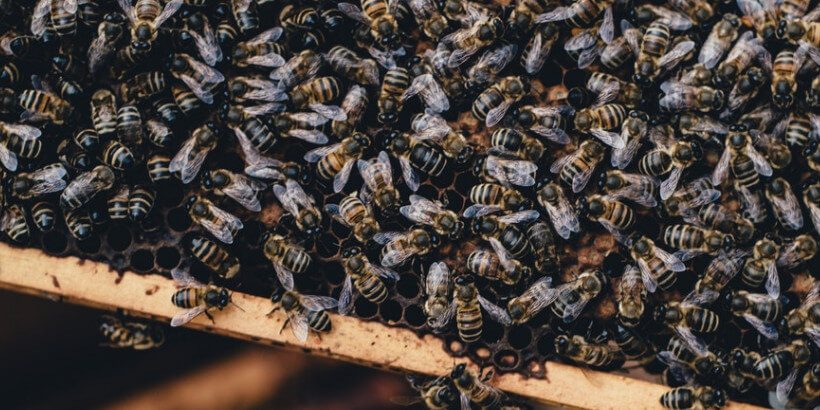
<p>Looking around our home, there are plenty of signs that we haven’t. Most of the blueberry bushes limped through the winter, but I lost two of them owing to my imperfect stewardship from prior years. One of Bob’s beehives died out because we divided the colony at the wrong time last year. This year’s mistakes are already forthcoming: Sitting cozy by the fire in February, we decided to plant a small orchard and mail ordered eleven trees. That’s a stupid thing to do. It is fine to decide to plant an orchard, but that decision means the next growing season should be devoted to preparing the soil for the following year, not to planting and watering baby trees. In our zeal, we skipped an all-important step, and now those poor trees must struggle to survive in soil that is nutrient-poor and nearly devoid of microbial life.</p>
<p><em>Continue reading this article at</em> <a href="http://www.yesmagazine.org/blogs/shannon-hayes/radical-homemaking-its-not-a-competition">Yes! Magazine</a>.</p>
<table border="0" cellpadding="5" align="center" bgcolor="#dbdbdb">
<tbody>
<tr>
<td><a href="http://www.chelseagreen.com/bookstore/item/radical_homemakers:paperback"><img src="https://www.chelseagreen.com/common/files/image/_tmb_product/505.jpg" alt="rawmilkrevolution" width="100px" height="150px" /></a></td>
<td>Shannon Hayes is the author of <a href="http://www.chelseagreen.com/bookstore/item/radical_homemakers:paperback"><em>Radical Homemakers</em></a>.</td>
</tr>
</tbody>
</table>
]]></content:encoded>
			<wfw:commentRss>http://chelseagreen.com/blogs/shannonhayes/2011/05/01/radical-homemaking-it%e2%80%99s-not-a-competition/feed/</wfw:commentRss>
		</item>
		<item>
		<title>Saying Goodbye: What Do We Teach Kids about Death?</title>
		<link>http://chelseagreen.com/blogs/shannonhayes/2011/03/31/saying-goodbye-what-do-we-teach-kids-about-death/</link>
		<comments>http://chelseagreen.com/blogs/shannonhayes/2011/03/31/saying-goodbye-what-do-we-teach-kids-about-death/#comments</comments>
		<pubDate>Thu, 31 Mar 2011 13:20:23 +0000</pubDate>
		<dc:creator>shannonhayes</dc:creator>
		
		<category><![CDATA[Simple Living]]></category>

		<guid isPermaLink="false">http://chelseagreen.com/blogs/shannonhayes/?p=17</guid>
		<description><![CDATA[My grandfather is dying. He is 92, and just before Christmas he came  down with pneumonia. His health and awareness have been in steady  decline since then, and his doctors have begun preparing us for the end.  Uncle Tommy and Aunt Kimmie, who moved in with him a few years ago,  [...]]]></description>
			<content:encoded><![CDATA[<p>My grandfather is dying. He is 92, and just before Christmas he came  down with pneumonia. His health and awareness have been in steady  decline since then, and his doctors have begun preparing us for the end.  Uncle Tommy and Aunt Kimmie, who moved in with him a few years ago,  have been overseeing his care. They are now assisted by one day nurse,  my Aunt Katie, and my dad, who take shifts to make sure Tommy and Kimmie  can rest, and to guarantee that Grandpa can stay in his home.</p>
<p>I called my dad two nights ago to ask if I could join him on his  shift for Sunday morning. He agreed, warning me that in the last few  days, Grandpa had stopped conversing. I asked if he minded if I brought  the girls.</p>
<div class="pullquote">Coping with death was an on-farm necessity. But much of our family still preferred to keep it a safe distance from life.</div>
<p>“I don’t know. Maybe we can talk about it later.” With that, the conversation ended.</p>
<p>That was his code for telling me that I had to make the decision.</p>
<p>I thought back over my own experiences with death as a child. My  brother and I cared for pets who were making their passages; attempted  to save baby birds who’d fallen out of their nests; carried hypothermic  lambs into the kitchen on cold winter nights, and worked to resuscitate  them until they died in our arms; removed dead chickens from the coop.  Coping with death was an on-farm necessity. But much of our family still  preferred to keep it a safe distance from life.</p>
<p><em>Continue reading this article at</em> <a href="http://www.yesmagazine.org/blogs/shannon-hayes/saying-goodbye">Yes! Magazine</a>.</p>
<table border="0" cellpadding="5" align="center" bgcolor="#dbdbdb">
<tbody>
<tr>
<td><a href="http://www.chelseagreen.com/bookstore/item/radical_homemakers:paperback"><img src="https://www.chelseagreen.com/common/files/image/_tmb_product/505.jpg" alt="rawmilkrevolution" width="100px" height="150px" /></a></td>
<td>Shannon Hayes is the author of <a href="http://www.chelseagreen.com/bookstore/item/radical_homemakers:paperback"><em>Radical Homemakers</em></a>.</td>
</tr>
</tbody>
</table>
]]></content:encoded>
			<wfw:commentRss>http://chelseagreen.com/blogs/shannonhayes/2011/03/31/saying-goodbye-what-do-we-teach-kids-about-death/feed/</wfw:commentRss>
		</item>
		<item>
		<title>My Antidote to Overwhelm</title>
		<link>http://chelseagreen.com/blogs/shannonhayes/2011/03/04/my-antidote-to-overwhelm/</link>
		<comments>http://chelseagreen.com/blogs/shannonhayes/2011/03/04/my-antidote-to-overwhelm/#comments</comments>
		<pubDate>Fri, 04 Mar 2011 15:15:05 +0000</pubDate>
		<dc:creator>shannonhayes</dc:creator>
		
		<category><![CDATA[Simple Living]]></category>

		<guid isPermaLink="false">http://chelseagreen.com/blogs/shannonhayes/?p=16</guid>
		<description><![CDATA[Yesterday morning, when I finished writing for the day, I signed on  to check my email. From the sea of unread messages, one stood out. The  subject line, written in all caps, read: HOW DO YOU DO IT ALL?
The more I write, the more I speak, the more I hear this question.  [...]]]></description>
			<content:encoded><![CDATA[<p>Yesterday morning, when I finished writing for the day, I signed on  to check my email. From the sea of unread messages, one stood out. The  subject line, written in all caps, read: HOW DO YOU DO IT ALL?</p>
<p>The more I write, the more I speak, the more I hear this question.  It’s understandable. I paint my life as a dreamy blend of farming,  cooking, home schooling, canning, lacto-fermenting, music-making,  soap-making, crafting, writing, occasional travel for speaking  engagements or research and, believe it or not, I even find time to  knit. I’ve knit two sweaters already this winter (confession: one was  about three times larger than it was supposed to be, so Bob pulled the  whole thing out). On the surface, I might seem like a regular Martha  Stewart (only with bare feet, messy hair, and no stock portfolio).</p>
<p>Thus, when I hear those six words, HOW DO YOU DO IT ALL, I must be ready with my reply.</p>
<p>I don’t. Radical Homemakers are not one-person wonders,  single-handedly capable of heroic feats of self-reliance. Rather, we  have some handy skills (cooking, knitting, gardening), and then some  meta-skills that work the real magic: savvy functioning within a  life-serving economy, an ability to self-teach and overcome fears,  realistic expectations, an understanding of what gives us deep pleasure,  and, most importantly, relationship skills. I don’t do it all. I am in  an interdependent relationship with my family and my closest friends,  and together, we get stuff done.</p>
<p>Often, however, that answer doesn’t satisfy the asker. If they are in  front of me, they lean forward, grow more intense and say, “Sure. Okay.  But what about you. How do you do it? How do you get through your day?  How do you write, cook a meal, and homeschool your kids?”</p>
<p>I confess that Bob washes the dishes.</p>
<p>There must be more to it than that, I’m told.</p>
<p>Okay. Here’s another try. Think of knitting as my substitute for  prescription sedatives and alcohol. But that answer, too, only partially  satisfies.</p>
<p>No television? Well, yes, that’s a time-saver, but often something my audience has already tried.</p>
<p>And then I have to hit on my biggest admission. I’m on a low-electron  diet. Ask me the headlines. Or even for a weather forecast. Save for  maybe once or twice a month, I can’t answer you. I can’t tell you the  names of any pop stars, I have no understanding of what Twitter is, I’ve  never held a “hand-held device,” and I can’t find my Facebook page  without using the search function.</p>
<p>My computer is turned off every morning, once my work day is  complete, usually around 9am. At that point, I tune out the rest of the  world and tune into my family, home, and farm. Very often the telephone  gets turned off, too. So does the radio.</p>
<p>I shut out the wide world to tend to my immediate world.</p>
<p>I didn’t always live this way. It was a choice I eventually made  about using my time. Voices talking on the radio generated mental  interference when trying to interact with people in the room where I was  standing. Worse than that, I observed that email correspondence  throughout the day, habitual Googling, and a steady-stream of  web-updates were having a negative impact on my soul. Fixating on the  computer made me an intolerant mother to my kids, had me doing stupid  things like boiling over my soup pots, and—even if I was reading great  news on the screen—it left me crabby. Answering the telephone during the  day had a similar effect. It distracted me from taking a walk, cooking,  or having a warm drink with Bob; worse, it would break up the rhythm of  homeschooling.</p>
<p>Until now, I’ve kept my media phobia under wraps. After all, how  could I publicly condemn the Internet (especially in a blog post), when  the Internet is what enables me to be a stay-at-home parent,  self-publishing books from a room just off my kitchen? How could I  poo-poo cyberspace when I depend on it to research my books, to search  my library’s card catalog, to get directions for where I am going? How  can I turn off my computer when e-mails and reader comments on my  Facebook page or blog posts are often the encouragement I need to keep  writing and researching? Worse still, what right do I have to engage in  social criticism if I don’t even know the headlines?</p>
<p>I grapple with these questions a lot, which is why I’ve been loathe  to admit how disconnected I truly am from the wide world. I survive my  life by blocking out interference at critical times in the day. My  hesitation in admitting this is because I feel guilty. My low-electron  diet makes me question if I am a good citizen if I am this out of touch  with the world around me. Then I heard a great fact on NPR (I’m not  always tuned out): the average person consumes nearly three times as  much information today as they did in 1960.</p>
<p>This helps me put my low-electron diet in perspective. I am not “tuning  out the world.” I am, however, limiting my information consumption to a  level that enables me to function effectively in my life. I’ve learned  that I need to be selective about what I let in, and I limit it to those  things that I feel that I can influence, or that directly tie in to my  most deeply held values.</p>
<p>I am forever advocating that we find ways to reduce our consumption  to reasonable levels, and maybe information consumption is just one more  venue we might consider. Can our bodies and brains truly tolerate the  levels of information consumption we are engaging in? If we are in a  state of overload, does that prevent us from leading socially and  ecologically responsible lives—taking away the time we might be spending  with our children, creating simple pleasures that don’t harm the Earth,  growing our own food, or otherwise nourishing ourselves, our  communities, and our families? I am thankful for much of the media that  is available, for the information that helps me to understand how my  lifestyle impacts the rest of the planet. But I have personally  discovered that my brain simply cannot process all of it and  simultaneously allow me to live a life in harmony with my values. If I  take too much in, I lose my ability to concentrate.</p>
<p>And that, I think, is the missing component to the ever-present  question, HOW DO YOU DO IT ALL? I can, farm, cook, teach, learn, parent,  write, knit and best of all, enjoy my life, because, for better or  worse, my mind is free to focus on the matters that are closest to my  heart.</p>
<p><em>Read the original article on</em> <a href="http://www.yesmagazine.org/blogs/shannon-hayes/my-antidote-to-overwhelm">Yes! Magazine&#8217;s website</a>.</p>
<table border="0" cellpadding="5" align="center" bgcolor="#dbdbdb">
<tbody>
<tr>
<td><a href="http://www.chelseagreen.com/bookstore/item/radical_homemakers:paperback"><img src="https://www.chelseagreen.com/common/files/image/_tmb_product/505.jpg" alt="rawmilkrevolution" width="100px" height="150px" /></a></td>
<td>Shannon Hayes is the author of <a href="http://www.chelseagreen.com/bookstore/item/radical_homemakers:paperback"><em>Radical Homemakers</em></a>.</td>
</tr>
</tbody>
</table>
]]></content:encoded>
			<wfw:commentRss>http://chelseagreen.com/blogs/shannonhayes/2011/03/04/my-antidote-to-overwhelm/feed/</wfw:commentRss>
		</item>
	</channel>
</rss>