

The Coronation: An Introduction
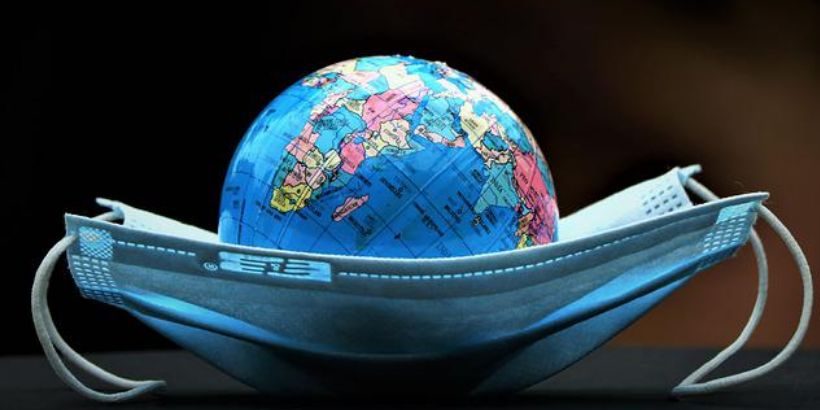
“Charles Eisenstein is one of the most original writers working today, and his essays on the social and spiritual impact of the pandemic event are among his best work. The Coronation is essential reading for anyone concerned about the damage that has been done to our societies and how we might recover and collectively go forward from here.” – C. J. Hopkins, award-winning playwright, novelist, and political satirist
Tragedy and controversy, hope and despair, courage and defiance, separation and reunion. How can we find meaning and cohesion as we emerge from the shattering pandemic moment?
In his new book The Coronation, bestselling author and renowned public speaker Charles Eisenstein offers a way forward through a series of unforgettable essays that give us a model of what our “new normal” can be. A philosophical thinker and activist, Eisenstein uses this book to shed an original light on the pandemic via themes like the story of separation, the program of control, the paradigm of reductionism, the denial of death, and the dynamics of social division.
By acknowledging the social crisis that COVID-19 has revealed, we will be more equipped to build a future that is more sound and more whole. Now is a better time than ever to answer the question, “What kind of world do you want to live in?”
The following is an excerpt from The Coronation by Charles Eisenstein. It has been adapted for the web.
A Complicated Goddess
In India, I have heard, various faiths have made of Covid a new goddess, and installed her on their altars along with the rest. And why not? In pantheistic religions, the gods personify forces of man and nature, mediating the known and the unknowable. A goddess can be placated, propitiated, angered, or appeased, but never can she be conquered nor definitively understood.

The pattern of reductionism is in large part responsible for this horrifying mess we are in—the reduction of illness to pathogens, the reduction of public health to metrics, the reduction of citizens to medical objects. Let us not repeat the pattern by reducing the Covid phenomenon to one thing also. It is many things.
Whatever it is and is not, certainly Covid has wielded a mighty power, transforming society more than anything else in my lifetime. It has been apocalyptic, revealing in stark relief shad- owy forces of the collective psyche. And of the individual psyche. And of my psyche! I know I am not alone in having undergone a deep journey in the time of Covid, even a kind of initiation. These essays trace that journey as each element of the collective psyche finds expression in me. The polar forces that Covid has flushed to the surface match similar hidden conflicts in myself, bubbling up for me to grapple with. These essays for the most part don’t describe my inner process directly, but they certainly bear its trace. Defiance, despair, resignation, rage, doubt, hope, fear, dismay, conciliation, militancy—each takes its turn as author at some point in this book.
Only the Beginning

Among other things, Covid has revealed how close we are to totalitarianism. It took so little for its full machinery to spring into motion: surveillance, censorship, propaganda, restriction of movement, suspension of civil liberties. One explanation is that nefarious forces have been preparing for this moment for a long time. Perhaps. But to do so, they exploited psychosocial patterns and myths that are older than history. These will not easily disappear even if the pandemic is declared over and corrupt institutions and individuals punished. I explore these patterns and myths repeatedly throughout this book: the story of separation, the program of control, the myth of redemptive violence, the story of good versus evil, the paradigm of reductionism, the denial of death, the cult of quantity. As long as these patterns and myths remain intact, then even if the goddess Covid is exiled to the history books, they will soon draw in a successor.
What Can We Do?
As the threat of medical totalitarianism has not yet passed, I hesitate to retreat too far into the philosophical. It is time to speak out, directly, without hiding behind abstractions. But to ignore the conditions that have brought this civilizational illness upon us would be to commit the same error that motivates so much public health policy. If a virus of corruption, profit, and power has infected the body politic, let us not
simply go to war against that virus without asking about the terrain.

As these questions suggest, the source of our susceptibility lies deep in the collective psyche. To transform it requires nothing less than a total transformation of consciousness and culture, a profound shift in our basic mythology. Ultimately, as the Indian worshippers have recognized, Covid is a mythic event and must be addressed on that level. That is what I attempt to do in these essays—to render service to the goddess Covid in her quest to reveal what was hidden.
The illumination of that which was hidden can be a devastating event. Lies and delusions disintegrate, leaving the initiate bewildered, vulnerable, and afraid. Yet that moment also bears the possibility of liberation. It is an initiation from servitude into sovereignty. It is a coronation, when unconscious choices become conscious and hidden masters are exposed. Exposed, they lose their power, which all along depended on deception. The true master reclaims her crown.
That is the opportunity before us. It remains to be seen whether we will successfully pass the test. Will we claim true democracy? Will we reclaim life from the altar of safety? May this book be an ally to the part of you that says Yes.
Recommended Reads
Mechanistic Thinking: Solitude, Social Connections and Sense of Meaninglessness
Read The Book

The Coronation
Essays from the Covid Moment
$19.95
You may like...
-
 $17.95
 -
$29.95
-
$14.95


Recent Articles
Mead is one of the oldest fermented beverages and is made by fermenting honey with water, offering countless flavor possibilities. Let’s dive into the world of mead making!
Read More
Learn how to make the anti-inflammatory cocktail, Gates of Immortality! This is a vibrant, botanical twist on the classic Whiskey Smash.
Read More
Hot sauce fans, this one’s for you! This easy recipe for fermented hot sauce with wild greens is sure to add an extra punch of flavor to your favorite meal.
Read More
Unlocking the full potential of your medicinal remedies starts with effective harvesting and drying of herbs. Here are some tips to get you started!
Read More
Make your own kombucha at home – it’s easier than you think! Kombucha is not only great for your gut health. It’ll make your taste buds happy, too. Get bubbling with this easy recipe to make your own kombucha!
Read More